


Royal London is not one palace but a cluster of them, built over four centuries within a few minutes of each other. This walk starts with the one everyone knows and then moves into St James's, where the older houses stand, ending at the art school the crown helped to found.
Buckingham Palace: a townhouse that became a palace
Buckingham Palace began in 1703 as a townhouse for the Duke of Buckingham and Normanby. George III bought it in 1761 for Queen Charlotte, and John Nash and Edward Blore then enlarged it around a courtyard. Victoria was the first monarch to live here, from 1837. The face you see from the Mall is later still: Aston Webb redesigned the east front in 1913.
Clarence House: a family home beside the Mall
Clarence House is a good deal smaller. Nash designed it for the Duke of Clarence, the future William IV, and it was finished in 1827. Princess Elizabeth lived here before she became queen, and the Queen Mother was its resident from 1953 until 2002. Today it is the London home of King Charles III and Queen Camilla.
Saint James's Palace: the senior royal palace
Saint James's Palace was built for Henry VIII between 1531 and 1536, on the site of a hospital for lepers. The red-brick gatehouse still has its octagonal towers, and the initials H and A, for Henry and Anne Boleyn, appear in the building. Foreign ambassadors to Britain are still accredited to the Court of St James's, a title taken from this building.
Marlborough House: Wren's house for a duchess
Marlborough House was finished in 1711 for Sarah, Duchess of Marlborough, who thought the Wrens, father and son, were too grand and took over the design herself. Since 1965 it has been the headquarters of the Commonwealth Secretariat. Inside, the saloon has wall paintings of the Battle of Blenheim by Louis Laguerre.

Royal Academy of Arts: George III's school of artists
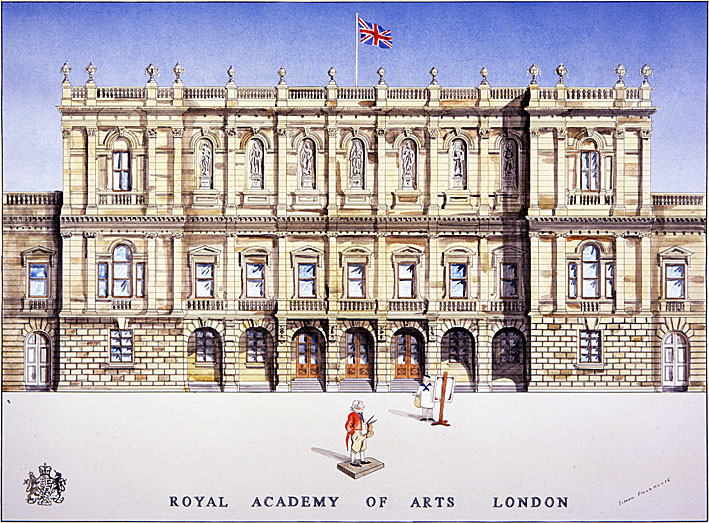
George III signed the foundation of the Royal Academy of Arts in 1768, with Joshua Reynolds as its first president. It has been in Burlington House since 1868. Its Summer Exhibition has run every year since 1769 and accepts work from anyone who submits it. Inside is Michelangelo's marble Taddei Tondo, the only marble by him in Britain.
From a home that grew into a palace to a school the crown founded, the walk shows royal London as a set of working places, most of them seen best from the street.